
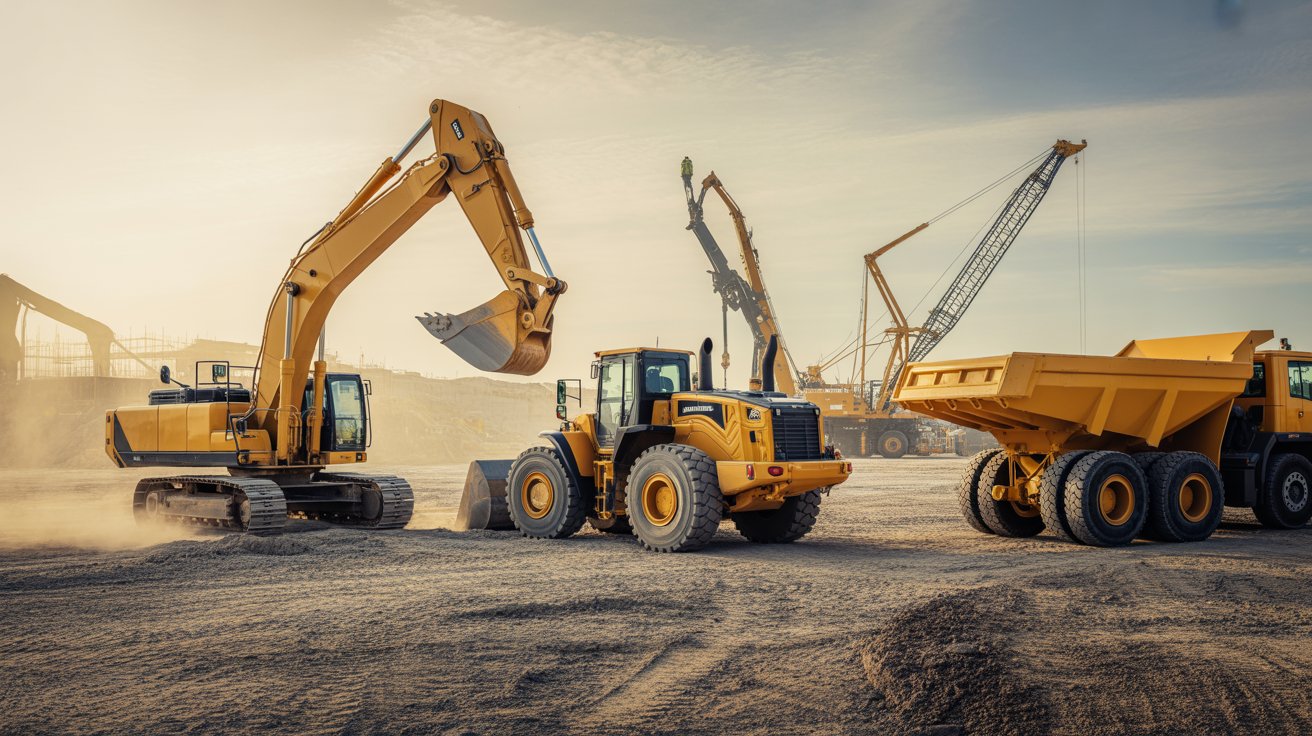
Among all the heavy machinery used across construction sites, the excavator remains one of the most recognizable, versatile, and powerful machines ever built. It is the backbone of countless construction, mining, demolition, and infrastructure projects worldwide. Whether digging deep foundations, shaping landscapes, or breaking tough concrete, the excavator is designed to do what manual labor simply cannot achieve efficiently or safely.
From small contractors to large companies handling mega-projects, the demand for excavators continues to rise due to their unmatched capabilities, precision, and adaptability. As we explore everything about this incredible machine its functions, uses, benefits, and variations you’ll understand why it dominates the modern development sector, especially when discussing different types of construction vehicles
What Is an Excavator?
An excavator is a heavy-duty machine built for digging, lifting, and moving large quantities of soil, debris, rocks, and other materials. It consists of three main components:
1. The Boom and Stick
This is the long arm used for digging and reaching.
2. The Bucket
This metal scoop at the end of the stick is used for cutting into soil or lifting materials.
3. The Cab and Undercarriage
The operator controls the machine from a rotating cab mounted on either tracks or wheels.
The entire upper structure rotates 360 degrees, allowing operators to dig, lift, and dump without repositioning the machine repeatedly. This rotational flexibility makes excavators extremely efficient and productive on job sites.
Why Excavators Are So Important
Excavators are essential in almost every phase of construction, starting from land preparation to final finishing work. They have multiple advantages that set them apart from other machines:
1. Powerful Digging Performance
Excavators are engineered to penetrate different types of terrains, including soil, clay, sand, and even rocky layers. Their hydraulic systems provide immense power that enables deep trenching and heavy lifting.
2. Multi-Purpose Capabilities
Modern excavators are much more than digging machines. With various attachments, they can easily transform into demolishers, lifting machines, dredging equipment, or drills.
3. Enhanced Precision
Operators can control depth, angle, and bucket movements with remarkable accuracy—making tasks like foundation digging and pipeline installation highly precise.
4. Superior Reach
Excavators with long booms can reach deep pits, tall structures, or areas that are otherwise hard to access.
5. Adaptability to Tough Terrains
Track-mounted excavators move smoothly on uneven, muddy, or rocky surfaces, making them ideal for projects in challenging landscapes.
Common Uses of Excavators
Excavators play a crucial role in a wide range of industries. Some of the most common applications include:
1. Excavation and Trenching
Used for digging foundations, basements, trenches for pipelines, and more.
2. Mining and Quarrying
Excavators extract minerals, remove overburden, and load materials onto dump trucks.
3. Demolition Work
Equipped with breakers or crushers, excavators can demolish buildings and clear debris.
4. Road and Highway Construction
They are used for clearing land, preparing the base, and loading materials.
5. River and Canal Projects
Excavators are used for dredging rivers, cleaning canals, and constructing embankments.
6. Landscaping and Agriculture
Mini excavators are used for leveling, digging ponds, and plantation work.
7. Disaster Response Work
Excavators help during emergencies by clearing collapsed structures, mudslides, and fallen trees.
Types of Excavators
Excavators come in multiple forms, each designed for specific tasks and conditions. Below are the major types:
1. Crawler Excavator
These are the most commonly used excavators. They run on tracks, offering excellent stability and traction.
Best Suited For:
-
Large earthmoving projects
-
Rocky or uneven terrains
-
Long-duration digging tasks
2. Wheeled Excavator
These machines are mounted on wheels instead of tracks, making them faster and easier to maneuver on paved surfaces.
Best Suited For:
-
Urban construction
-
Road maintenance
-
Utility works in cities
3. Mini Excavator
Compact and lightweight, mini excavators are perfect for small spaces.
Best Suited For:
-
Residential projects
-
Landscaping
-
Tight or indoor worksites
4. Long Reach Excavator
This type features an extended boom and stick for greater reach.
Best Suited For:
-
Deep digging
-
Riverbank work
-
High-reach demolition
5. Dragline Excavator
Draglines are massive machines used mostly in mining and large-scale excavation.
Best Suited For:
-
Underwater operations
-
Harbor construction
-
Large pits and quarries
6. Suction (Vacuum) Excavator
Instead of digging with a bucket, it sucks soil using high-powered airflow.
Best Suited For:
-
Utility line maintenance
-
Fiber-optic installations
-
Sensitive excavation tasks
7. Amphibious Excavator
Built for soft terrains and water-filled areas, they float and work in wetlands.
Best Suited For:
-
Swamps
-
Marsh construction
-
Water restoration projects
Attachments Used With Excavators
What makes excavators truly versatile is their ability to switch attachments. Popular attachments include:
• Hydraulic Breaker
Used for breaking concrete, stones, and old structures.
• Auger
Used for drilling holes for poles, fencing, and foundations.
• Grapple
Used in forestry and waste handling.
• Ripper
Used for breaking hard soil or frozen ground.
• Tiltrotator
Allows 360-degree rotation of attachments for maximum control.
Benefits of Using Excavators in Construction
1. Saves Time and Labor
Excavators reduce project duration significantly, cutting down manual labor and operational time.
2. Improves Safety
Modern excavators come with ROPS cabins, cameras, sensors, and stable bases that reduce risks.
3. Cost-Effective in the Long Run
Though expensive, excavators pay for themselves through efficiency and reduced manpower.
4. Suitable for Any Project Size
From mini excavators for backyard work to draglines for mega-mines, there is an excavator for every need.
Safety Tips When Operating an Excavator
-
Always inspect hydraulics and tracks before use
-
Maintain proper communication with ground workers
-
Avoid operating on extremely steep slopes
-
Ensure the machine is parked safely when not in use
-
Only trained operators should handle the equipment
Conclusion
Excavators are undeniably among the most critical machines in the construction, mining, and infrastructure sectors. Their ability to dig, lift, break, load, and handle multiple tasks makes them indispensable on job sites. With their various types including crawler, wheeled, long-reach, mini, and dragline excavators they offer solutions for every kind of project, from small residential work to large-scale industrial developments. Understanding their benefits, functions, and the different categories helps contractors make smarter equipment decisions and ensures better project outcomes. As the construction industry evolves, excavators will continue to play a crucial role in shaping the future just like they do in discussions about the most essential types of construction vehicles used today.