
Introduction
Football equipment design requires a delicate balance between competing priorities: maximum protection versus unrestricted mobility. Too much padding creates sluggish, constrained athletes. Too little protection invites preventable injuries that sideline players. The best integrated football girdle represents decades of biomechanical research and material science innovation culminating in equipment that optimizes both safety and athletic performance simultaneously.
Understanding the engineering principles, anatomical considerations, and design compromises underlying these garments reveals why integrated systems have become standard equipment across competitive levels. From youth leagues to professional programs, the sophisticated design philosophy embedded in modern girdles directly impacts player safety and performance outcomes.
Anatomical Foundation: Understanding Lower Body Impact Zones
Effective protection design begins with comprehensive understanding of injury patterns and vulnerable anatomical structures. Lower body injuries in football follow predictable patterns based on contact mechanics and skeletal anatomy.
The iliac crest—the prominent hip bone ridge—represents one of football’s most commonly injured areas. Hip pointer injuries occur when direct impacts bruise this superficial bone structure, causing debilitating pain that restricts running, cutting, and even breathing deeply. An integrated football girdle positions contoured padding directly over this vulnerable landmark, distributing impact forces across larger surface areas.
Quadriceps contusions, commonly called “charley horses,” result from direct thigh impacts that crush muscle tissue against the femur. These injuries create severe pain, loss of function, and potential complications including myositis ossificans—abnormal bone formation within muscle tissue. Strategic thigh padding prevents the direct force transmission that causes these injuries.
The coccyx (tailbone) and sacrum face significant injury risk when players fall backward or receive hits from behind. Tailbone injuries prove particularly troublesome, causing pain during sitting, standing, and nearly all athletic movements. Specialized padding protects this delicate bone structure without adding bulk that would restrict hip flexion.
Biomechanical research published in the American Journal of Sports Medicine identifies these three zones—hips, thighs, and tailbone—as accounting for 68% of lower body contusion injuries in football. football girdle with built-in padding design concentrates protection precisely where statistical evidence demonstrates greatest need.
The Engineering Challenge: Protection Without Restriction
Creating protective equipment that doesn’t impair athletic performance requires sophisticated engineering addressing multiple competing demands simultaneously. A football girdle with built-in padding must absorb substantial impact energy while remaining lightweight, flexible, and comfortable enough for extended wear.
Impact Absorption: Modern foam materials utilize closed-cell structures that compress under force, converting kinetic energy into heat through material deformation. The foam’s recovery properties allow rapid return to original shape, maintaining protection throughout game-long repeated impacts.
Weight Optimization: Every ounce of equipment weight demands additional energy expenditure from athletes. Advanced polymer foams deliver protection using 40% less material mass than traditional padding technologies, reducing metabolic burden without compromising safety.
Flexibility Preservation: Football demands extreme range-of-motion requirements—full hip flexion during running, lateral flexibility during cutting, and rotational mobility during throwing or blocking. Padding must compress and flex with body movements rather than resisting them.
Thermal Management: Multiple equipment layers create heat buildup challenges. Breathable fabrics and ventilated padding designs facilitate heat dissipation, maintaining core temperature regulation that preserves performance.
Professional equipment engineer Dr. Robert Chang explains: “Designing an effective integrated football girdle requires optimizing twelve different variables simultaneously. Change one factor—padding thickness, for example—and you impact weight, flexibility, ventilation, and cost. The engineering challenge involves finding the optimal balance point across all performance criteria.”
Material Science: Foams, Fabrics, and Advanced Polymers
Contemporary integrated football girdle performance relies on material science advances unavailable to previous equipment generations. Understanding these materials reveals why modern designs outperform older technologies substantially.
High-Density Polyethylene Foam: This closed-cell material provides excellent impact absorption while remaining lightweight and maintaining flexibility across temperature ranges. Unlike open-cell foams that absorb moisture and lose protective properties, polyethylene maintains performance even when wet.
EVA (Ethylene-Vinyl Acetate): Often used in combination with polyethylene, EVA foam offers superior flexibility and comfort while providing adequate protection for moderate-impact zones. Its softer feel reduces pressure points during extended wear.
Compression Fabrics: Four-way stretch synthetic blends—typically polyester and spandex combinations—provide muscle support while allowing unrestricted movement. These fabrics maintain tension consistently over thousands of use cycles without significant degradation.
Moisture-Wicking Treatments: Chemical or physical fabric treatments create capillary structures that pull sweat away from skin through wicking action. This moisture management prevents saturation that would impair both comfort and thermal regulation.
Antimicrobial Coatings: Silver-ion or similar treatments inhibit bacteria colonization that causes odor and potential skin irritation. Since football girdle with built-in padding garments contact skin directly and absorb perspiration, these treatments significantly enhance hygiene and longevity.
Material selection decisions involve trade-offs between cost, performance, durability, and environmental considerations. Premium girdles utilize more expensive materials delivering superior performance, while budget options compromise slightly on advanced features while maintaining acceptable protection levels.
Strategic Padding Placement and Contouring
Random padding distribution creates protective dead zones and unnecessary bulk. Integrated football girdle design utilizes biomechanical analysis and injury data to position protection precisely where athletes need it.
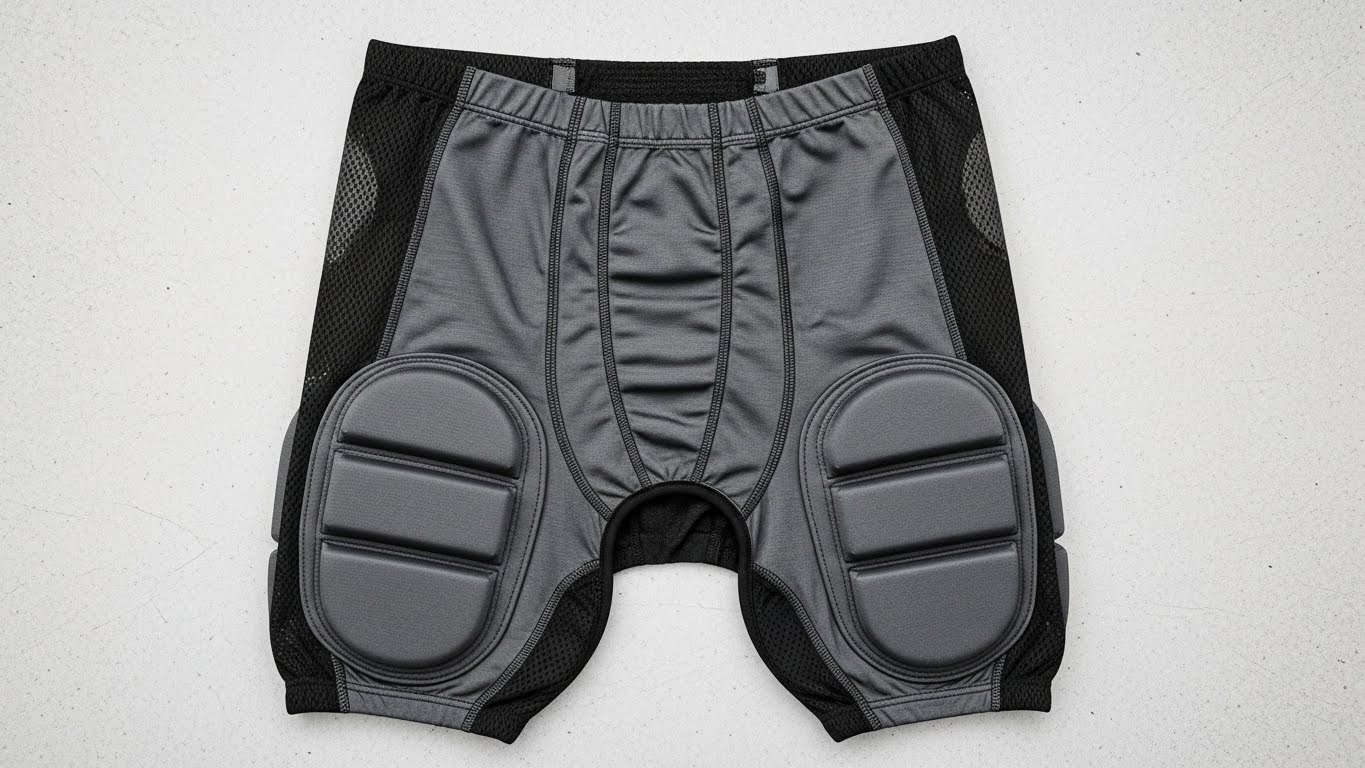
Hip Pads: Contoured to match iliac crest anatomy, hip pads typically measure 5-7 inches in length and utilize firmer foam densities given the high-impact nature of this zone. Asymmetric shaping accommodates the bone’s curved structure, maintaining pad position during movement.
Thigh Pads: Oval-shaped pads cover the quadriceps muscle belly—the area most vulnerable to direct impacts. Padding extends approximately 8-10 inches along the thigh, positioned to protect without interfering with knee joint function. Tapered edges prevent the hard stops that would restrict running mechanics.
Tailbone Pad: Specialized coccyx protection utilizes softer foam over a larger surface area, distributing impact forces that might otherwise concentrate on the small tailbone structure. This padding extends from the sacrum down approximately 4-5 inches.
Knee Pads: Many football girdle with built-in padding systems include supplemental knee padding providing impact protection and abrasion resistance. While not substitutes for knee braces when medically indicated, these pads prevent turf burns and protect against incidental contact.
Advanced designs incorporate graduated padding densities—firmer foam at impact surfaces transitioning to softer materials at body-contact surfaces. This density gradient optimizes both protection and comfort simultaneously.
Compression Integration and Muscle Support Benefits
The compression component of integrated football girdle systems delivers benefits extending beyond simple padding retention. Graduated compression provides measurable physiological advantages affecting both performance and recovery.
Proprioceptive Enhancement: Compression stimulates mechanoreceptors in skin and underlying tissues, improving body position awareness. Enhanced proprioception correlates with better movement quality and reduced injury risk from awkward positions or poor technique.
Muscle Oscillation Reduction: During explosive movements, muscles vibrate at frequencies requiring energy to sustain. Compression dampens these oscillations, improving mechanical efficiency by 3-4% according to research in the Journal of Strength and Conditioning Research.
Circulatory Support: Graduated pressure facilitates venous return—blood flow back toward the heart—improving oxygen delivery and metabolic waste removal. This circulatory enhancement supports sustained performance during extended competitions.
Recovery Acceleration: Post-exercise compression reduces inflammation and edema while accelerating lactate clearance. Athletes wearing compression during recovery periods report reduced soreness and faster return to peak performance capability.
The compression elements in an football girdle with built-in padding must provide support without excessive pressure that would impair circulation or restrict breathing. Proper calibration requires sophisticated understanding of compression physiology and extensive athlete testing during development.
Position-Specific Design Variations
Different football positions create distinct protection and mobility requirements. While all players benefit from core protective elements, position-specific football girdle with built-in padding variations optimized for particular demands.
Linemen Designs: Offensive and defensive linemen require maximum hip and thigh protection given the high-frequency contact inherent to their positions. Linemen girdles typically feature thicker padding and extended coverage areas, accepting slight mobility reductions for enhanced safety.
Skill Position Models: Running backs, receivers, and defensive backs prioritize mobility and minimal weight. Skill position girdles utilize thinner, more flexible padding that maintains protection while optimizing speed and agility.
Linebacker Configurations: These hybrid positions balance contact frequency with movement requirements. Linebacker girdles provide substantial protection in high-impact zones while maintaining the flexibility necessary for coverage responsibilities.
Quarterback Specializations: Some quarterbacks prefer minimal lower body padding maximizing pocket mobility, while others choose more protection given increased defensive pressure in modern football. Customization accommodates these individual preferences.
Position-specific optimization allows athletes to select equipment matching their role’s specific demands rather than accepting one-size-fits-all compromises that optimize for no position particularly well.
Fit Engineering: Sizing Systems and Adjustability
An integrated football girdle provides intended benefits only when properly fitted to individual athlete anatomy. Sophisticated sizing systems and adjustable features accommodate the substantial anthropometric variation across football players.
Multi-Dimensional Sizing: Quality girdles utilize sizing matrices considering both waist circumference and inseam length rather than single-number sizing. This two-dimensional approach better accommodates diverse body types.
Adjustable Waistbands: Elastic waistbands with adjustment mechanisms allow fine-tuning after initial size selection. This adjustability accommodates weight fluctuations during seasons and provides optimal comfort across different athletes with similar measurements.
Padding Position Flexibility: Some premium designs allow minor padding repositioning to match individual anatomy variations. This customization ensures protection covers each athlete’s specific vulnerable areas.
Compression Calibration: Graduated compression profiles accommodate different muscle groups and anatomical contours, providing optimal support without creating uncomfortable pressure points.
Proper fit assessment should occur with athletes performing sport-specific movements—squats, lunges, high knees, lateral shuffles—rather than static standing evaluation. Dynamic movement reveals fit issues that static assessment misses.
Maintenance, Care, and Equipment Longevity
Proper maintenance extends integrated football girdle effectiveness and lifespan while maintaining hygienic conditions for equipment contacting skin directly:
Washing Guidelines: Machine wash in cold water immediately after use. Prompt washing prevents sweat salt crystallization that degrades elastic fibers. Avoid fabric softeners that coat moisture-wicking treatments, reducing effectiveness.
Drying Protocols: Air drying preserves padding integrity and fabric elasticity better than machine drying. When machine drying becomes necessary, use low heat settings and remove promptly to prevent excessive heat exposure.
Inspection Routine: Examine padding before each use for compression, separation, or damage. Foam that doesn’t rebound fully after compression has lost protective capability and requires replacement.
Storage Methods: Store flat or hanging rather than wadded in equipment bags. Proper storage prevents permanent compression creases that degrade padding performance.
Replacement Timeline: Even with excellent care, foam materials and compression fabrics degrade over time. Most manufacturers recommend replacement every 2-3 seasons for high school and college players, annually for youth athletes experiencing rapid growth.
Integration with Complete Equipment Systems
A football girdle with built-in padding functions as one component within comprehensive protective systems. Understanding how girdles interact with other equipment ensures optimal overall protection:
Coordination with Pants: Football pants worn over girdles should accommodate padding without excessive compression that would reduce protective effectiveness or create uncomfortable pressure points.
Shoulder Pad Compatibility: Lower body protection must not interfere with shoulder pad fit or function. Equipment combinations should be tested together rather than evaluated independently.
Helmet and Neck Protection: While seemingly unrelated to lower body gear, overall equipment weight and restriction accumulate across all worn items. Comprehensive system evaluation prevents excessive burden.
Cleats and Ankle Support: Footwear and ankle bracing interact with girdle leg openings. Proper fit ensures no binding or circulation restriction at transition points.
Conclusion
The integrated football girdle represents sophisticated engineering addressing the complex challenge of protecting athletes while preserving the mobility essential for competitive performance. Through strategic padding placement, advanced materials, graduated compression, and thoughtful design, modern girdles deliver protection that previous equipment generations couldn’t match.
Understanding the biomechanical principles, anatomical considerations, and material science underlying football girdle with built-in padding design helps players, coaches, and parents make informed equipment decisions. When athletes wear properly fitted, well-maintained girdles engineered for their specific positions and body types, they gain protection enabling confident, aggressive play without unnecessary injury risk.
The design evolution continues as materials improve and biomechanical understanding deepens. Future football girdles with built-in padding innovations will further optimize the protection-mobility balance, but current technologies already provide remarkable safety and performance benefits for athletes at every competitive level.