
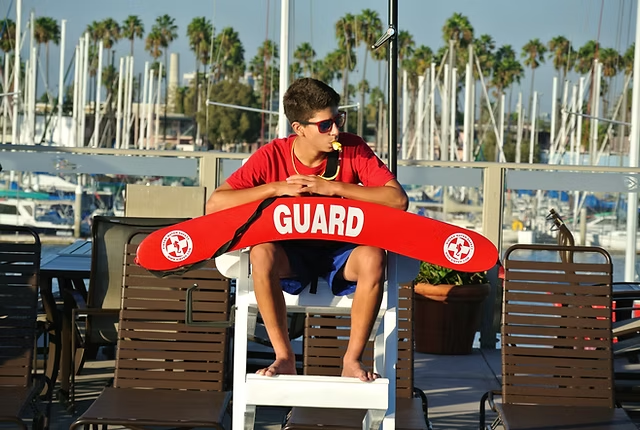
If you want to work at a pool, beach, waterpark or recreation center, enrolling in ALA‑approved lifeguard classes and training is one of the best ways to get certified, gain critical rescue and safety skills, and meet industry standards. The American Lifeguard Association (ALA) offers courses designed to prepare candidates for real‑world aquatic safety challenges from water rescues to CPR and first aid giving you the confidence and credentials to serve as a professional lifeguard.
In this article, we’ll cover what ALA training includes, how to enroll, what to expect, and answer common questions about lifeguard training and careers.
What Does ALA‑Approved Lifeguard Classes and Training Include?
ALA’s lifeguard classes and training are comprehensive and structured to meet national safety standards. When you enroll in ALA‑approved lifeguard classes and training, you can expect courses that cover:
Water Rescue & Surveillance Skills
You’ll learn how to monitor swimmers, identify potential hazards, and perform rescues in both shallow and deep water including active and passive victim rescues, submerged victim retrievals, and proper entries and exits for emergencies.
CPR, AED, and First Aid
A core part of the training involves cardiopulmonary resuscitation (CPR), use of AEDs (Automated External Defibrillators), and first aid crucial for responding to cardiac emergencies, drowning incidents, injuries, or other medical crises.
Spinal Injury Management and Emergency Protocols
Courses include training on handling spinal injuries, safe victim extrication, and secure transport especially important for pool, waterpark, or deep-water rescues.
Flexible Training Formats & Certification Validity
ALA offers flexible scheduling and blended learning combining online coursework with in-person skills sessions to accommodate varied schedules.
Upon successful completion, participants receive certification in Lifeguarding, CPR/AED, and First Aid, typically valid for two years.
Because ALA is a nationally recognized organization, their certification is accepted by many pools, waterparks, beaches, and aquatic facilities across the United States and beyond.
How to Enroll & What’s the Process
Signing up for ALA‑approved lifeguard classes and training is straightforward:
-
Visit the ALA website and check for upcoming class dates near you.
-
Meet prerequisites: be at least 15 years old (in many cases), and demonstrate swimming proficiency ALA often requires a continuous swim (for example, 300 yards) and a timed water-recovery test.
-
Complete the course: This includes the online theoretical portion and in-water/practical sessions.
-
Pass both written and practical assessments (rescue skills, CPR/AED, first aid, water safety protocols).
-
Receive your certification valid for two years.
Because ALA classes are offered frequently and nationwide, it’s often possible to find a session close to home meaning you don’t have to wait long before you begin training.
Why ALA‑Approved Lifeguard Classes and Training Stand Out
There are several reasons why many aspiring lifeguards choose ALA‑approved lifeguard classes and training over other options:
-
National Recognition & Compliance: ALA is recognized by governmental agencies such as the U.S. Department of Labor and meets federal lifeguard training standards.
-
Comprehensive Curriculum: The training doesn’t just cover basic rescues, but also first aid, CPR/AED, spinal injury management equipping lifeguards for a wide array of emergencies.
-
Flexible & Accessible: Blended learning and widespread class availability make it easier for people with varying schedules to complete certification.
-
Reputation & Safety Standards: With decades of experience and a track record of certifying many thousands of lifeguards worldwide, ALA has built credibility as a leader in aquatic safety training.
If you’re serious about a career in lifeguarding or simply want credible, high-quality certification ALA-approved courses offer a trusted, robust path forward.
What Happens After Certification Employment & Responsibilities
Once you complete ALA‑approved lifeguard classes and training, you are prepared to work in diverse aquatic environments such as:
-
Public or private swimming pools
-
Waterparks
-
Beaches or waterfronts
-
Resorts
-
Fitness clubs with aquatic facilities
As a certified lifeguard, your responsibilities may include: continuous surveillance of swimmers, enforcing safety rules, performing rescues, administering CPR or first aid, managing spinal injuries, coordinating with emergency services, and maintaining safety protocols.
Regular in‑service training and recertification help you stay sharp, up to date with evolving safety protocols, and ready for emergencies. ALA offers recertification options to ensure lifeguards maintain proficiency throughout their careers.
1. How to join the lifeguards?
To join the lifeguards, you should enroll in an ALA‑approved lifeguard classes and training program. Meet the prerequisites (often age and swimming proficiency), complete the training (theory + practical), pass the required assessments, and obtain your certification. Once certified, you can apply for positions at pools, beaches, waterparks, or aquatic facilities.
2. What is the highest level of lifeguarding?
The highest level of lifeguarding often involves advanced certifications beyond basic pool lifeguarding for example, waterfront or open-water lifeguarding, waterpark supervision, or aquatic facility management. ALA offers various levels of training depending on environment and responsibility level, allowing lifeguards to advance as they gain experience and additional credentials.
3. What job does a lifeguard fall under?
A lifeguard is considered part of aquatic safety and recreational services, often working for public pools, private clubs, beaches, waterparks, resorts, or municipal recreation departments. Their role includes water surveillance, rescue, first aid/CPR, enforcement of safety protocols, and acting as first responders in emergencies.
Conclusion: Why You Should Consider ALA‑Approved Lifeguard Classes and Training
If you are aiming for a reliable, respected, and practical lifeguard certification, ALA‑approved lifeguard classes and training is one of the best paths available. With a comprehensive curriculum, flexible class formats, recognized certification, and a history of thousands of graduates, ALA provides the foundation you need to begin a career in aquatic safety.
Whether you’re a first-time trainee or a returning professional seeking recertification, ALA’s courses prepare you to respond competently to emergencies, help save lives, and uphold high safety standards in any aquatic environment.