
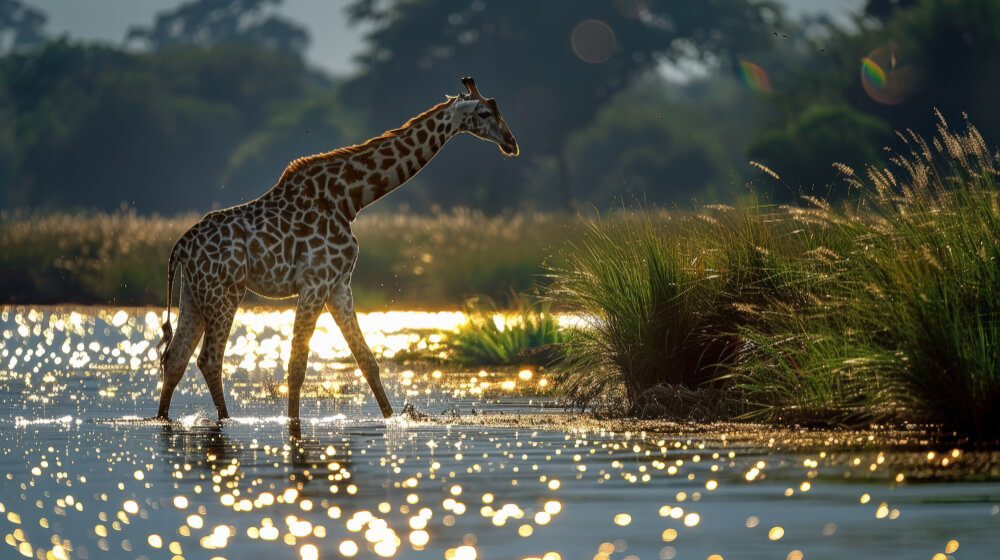
A symbol of the East African plains is the Maasai giraffe.
In Tanzania, the magnificent Maasai giraffe (Giraffa tippelskirchi) has a rich history. People adore its majestic appearance and the way that its height represents simultaneously witnessing the past and present. However, our lovely giraffe is more than simply a protruding neck and long legs.
Introducing Tanzania’s National Animal, the Masai Giraffe
There is only one picture that comes to mind when you think of Tanzania’s Serengeti: an elegant giraffe perched above the acacia trees, silently nibbling as the sun sets behind the savannah.
In addition to being the largest giraffe subspecies, the Masai giraffe, also known as the Kilimanjaro giraffe, is Tanzania’s national animal and a representation of the pride and beauty of the nation. These magnificent animals live in national parks including the Serengeti, Tarangire, Mikumi, and Selous Game Reserve. They are distinguished by their characteristic jagged, star-like coat patterns.
Giraffes, with their serene disposition and graceful gait, embody the tranquil spirit of Tanzania’s faunal legacy.

Species Overview: The Masai Giraffe at a Glance
| Scientific Name | Giraffa tippelskirchi |
|---|---|
| Common Name | Masai Giraffe / Kilimanjaro Giraffe |
| Conservation Status | Endangered (IUCN Red List) |
| Height | Up to 6 meters (19 feet) |
| Weight | Up to 1,200 kg (2,600 lbs) |
| Lifespan | 25 years (wild) |
| Habitat | Savannahs, grasslands, and open woodlands |
| Diet | Herbivorous – mainly acacia leaves |
| Distribution | Central, southern, and western Tanzania |
The Masai giraffe is the only giraffe species found in Tanzania, although it also ranges into southern Kenya. It is easily distinguished from other subspecies by its irregular, vine-like patches that cover its body—like an intricate natural artwork.
Where to See Giraffes in Tanzania
Throughout much of Tanzania, giraffes are allowed to travel freely, particularly in its conservation areas and protected national parks. It is nearly a given that you will come across these gentle giants whether touring Tarangire National Park or on a traditional Serengeti safari.
1. Serengeti National Park: The Serengeti of Tanzania is one of the best places on Earth to see giraffes in their natural habitat. The open plains and acacia-dotted landscapes offer the perfect feeding grounds for them.
- Best time to visit: June to October (Dry Season)
- Experience: Witness giraffes during the Great Migration alongside wildebeest and zebras.
2. Tarangire National Park: Known for its ancient baobab trees and massive elephant herds, Tarangire is also home to some of the largest giraffe populations in the country.
- Best for: Up-close encounters during walking safaris.
3. Mikumi National Park: Located near Dar es Salaam, Mikumi offers a more accessible safari option with thriving giraffe populations grazing the open savannahs.
4. Selous Game Reserve (Now Nyerere National Park): One of Africa’s largest protected areas, Selous provides a remote and wild environment for giraffes. Boat safaris along the Rufiji River often feature giraffes alongside elephants and hippos.
5. Ruaha National Park: Ruaha is home to some of Tanzania’s most stunning landscapes and an impressive giraffe population, making it ideal for photography enthusiasts.
Habitat of Giraffes in Tanzania
In Tanzania, giraffes flourish in savannahs, open woods, and scrublands, particularly those that are abundant in acacia trees, which are their preferred food source. These habitats provide enough of tall vegetation for feeding as well as vision for identifying predators.
They can reach foliage that other herbivores cannot because of their long necks, which lessens competition for food.
For these animals, Tanzania’s Serengeti habitat, which spans enormous plains, offers the perfect ratio of open area to food.

Conduct and Social Life
Giraffes are gregarious but calm creatures that are frequently found in loosely organized herds of ten to twenty. Males prefer to be solitary or form bachelor groups, whilst females create groups with their calves.
- Feeding: Giraffes browse leaves, especially those from commiphora and acacia trees, for 16 to 20 hours a day.
- Sleep: They take quick naps while standing up, sleeping for less than half an hour each day.
- Communication: They use body language and low-frequency sounds, which are inaudible to humans.
- Speed: In brief bursts, giraffes may reach speeds of up to 60 km/h (37 mph), despite their size.
They are a pleasure to see on safari because of their serene demeanor and distinctive walking style.
Conservation Status: Preserving the National Animal of Tanzania
Despite Tanzania’s healthy Masai giraffe population, the IUCN has listed them as endangered because of:
Loss of habitat due to agriculture and population growth
Hunting illegally (poaching for meat and hides)
The impact of climate change on vegetation patterns
Thankfully, protected regions like the Serengeti and Tarangire, as well as Tanzania’s Wildlife Conservation Act, have contributed to population stabilization.
Through conservation research and community education, a number of NGOs, such as the Tanzania Wildlife Research Institute (TAWIRI) and the Giraffe Conservation Foundation (GCF), monitor and protect giraffe populations.
Fun Fact: With more than 35,000 Masai giraffes roaming its parks and reserves, Tanzania is thought to have the greatest giraffe population in Africa.
Tanzanian Giraffe Safari Experiences
One of the joys of a safari in Tanzania’s Serengeti is seeing giraffes in their natural habitat. There are many chances for up-close interactions whether you’re on a wildlife drive, strolling safari, or even a hot air balloon safari.
- Morning Game Drives: The best time for photography—golden lighting, active giraffes, and stunning backdrops.
- Evening Safaris: Watch them silhouetted against breathtaking African sunsets.
- Walking Safaris: Available in parks like Tarangire, where giraffes roam peacefully among acacia groves.
- Hot Air Balloon Safaris: A magical way to see giraffes from above in Tanzania’s Serengeti.
Giraffes’ Place in Tanzania’s Ecosystem
The ecosystem of the Serengeti depends on giraffes. In order to let sunlight reach the plants below, they trim the treetops while they feed. Their browsing promotes biodiversity and shapes the savannah landscape.
Additionally, giraffes help with regeneration by dispersing acacia seeds throughout the plains through their excrement.
They are essential to Tanzania’s ecological equilibrium in addition to being symbols of elegance and beauty.
People Also Ask
- What type of giraffe is found in Tanzania?
The Masai giraffe (Giraffa tippelskirchi)—Tanzania’s national animal—is the only giraffe species found in the country. - Where can I see giraffes in Tanzania?
You can spot giraffes in Serengeti, Tarangire, Mikumi, Ruaha, and Selous National Parks. - Why is the giraffe important to Tanzania?
The giraffe symbolizes Tanzania’s natural beauty and plays a vital role in maintaining the ecological balance of the savannah. - Are giraffes endangered in Tanzania?
Yes, giraffes are classified as Endangered, but the populations in Tanzania are relatively stable due to strong conservation efforts. - What do giraffes eat in Tanzania?
They primarily feed on acacia leaves, which are rich in calcium and moisture. - Can I see giraffes during the Great Migration?
Yes, especially in the Serengeti of Africa, where giraffes share the landscape with migrating herds. - How tall is the Masai giraffe?
Adult males can grow up to 6 meters (19 feet) tall—the tallest land animal on Earth. - What is the national animal of Tanzania?
The Masai giraffe holds that honor. - Are there any giraffe conservation programs in Tanzania?
Yes—the Giraffe Conservation Foundation (GCF) and local NGOs work across Tanzania’s national parks. - When is the best time to photograph giraffes in Tanzania?
The best time to photograph giraffes in Tanzania is during the dry season (June–October), when they are easier to spot near watering holes.
Final Thoughts: A Symbol of Tanzania’s Wild Grace
In Tanzania, the giraffe is more than just an animal; it is a representation of endurance, beauty, and serenity. It’s an unforgettable sight, whether you see one eating in the scorching African sun or strolling elegantly across the plains of Tanzania’s Serengeti.
Future generations will be able to experience their silent magnificence on safaris throughout Tanzania if these graceful giants are protected.
The Masai giraffe, the real protector of Tanzania’s wild heart, will probably be watching you from above if you’re planning your next African Serengeti safari.